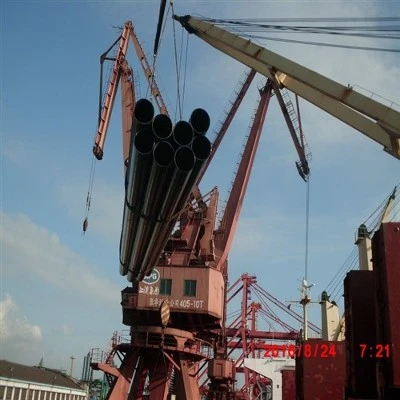
Door to door transportation originally refers to the transportation department's door-to-door pickup of goods, which can be delivered to the door without the need for loading and transportation. Nowadays, it often refers to the transportation of goods directly from the shipper's warehouse (shipping point) to the consignee's warehouse (receiving point). Regardless of the distance of the transportation, or the number of transportation links that must pass through the entire process, from the time the shipper's warehouse receives the goods to the time the goods are delivered to the consignee's warehouse, the entire transportation process is undertaken by the transportation department. The development of traditional "station to station" or "port to port" transportation. It has the advantages of accelerating vehicle and ship turnover, accelerating cargo transportation, improving transportation quality, and simplifying transportation procedures. It can be achieved through a single mode of transportation such as automobile transportation or railway transportation (usually through dedicated lines), but in most cases, it is achieved through multiple modes of transportation through intermodal transportation. Container transportation, due to the combination of goods into standardized transportation units, can easily complete replacement operations in various transportation modes, providing favorable conditions for the development of door-to-door transportation. Countries around the world have widely implemented door-to-door transportation in container transportation.
Da Gong International Logistic Co., Ltd (Shanghai)
+86-13061723674
 Language